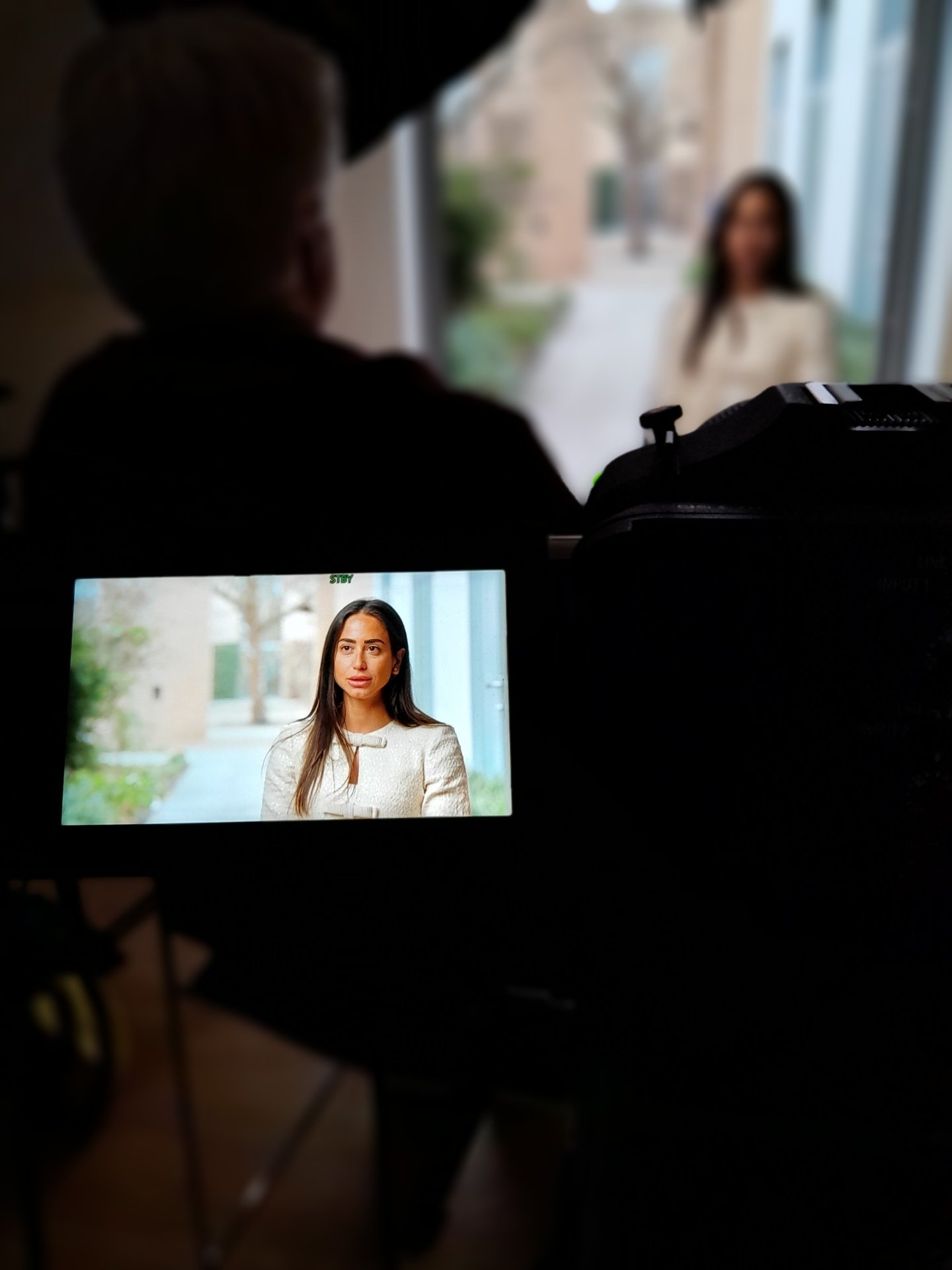
Repositioning the University of Oxford’s Executive MBA around the diversity of its people – and delivering record enrolments on the same budget.
This was an award-winning project
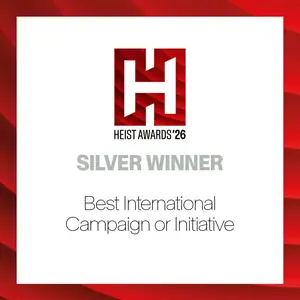
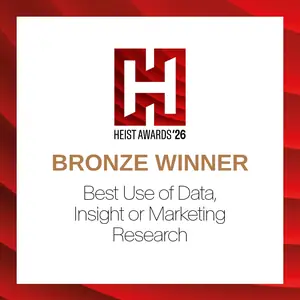
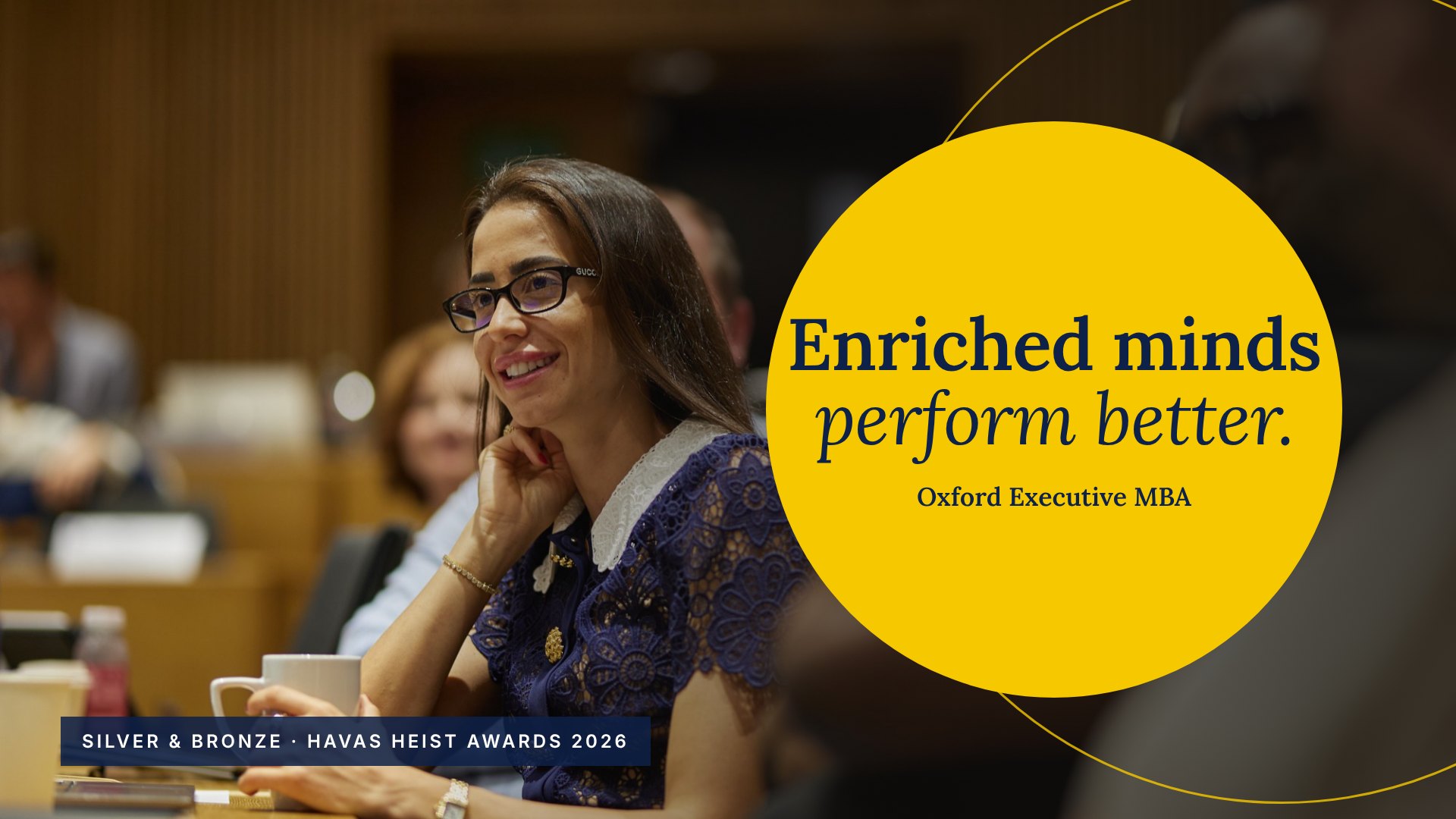
Shortlisted for five awards at the Havas HEIST Awards 2026, winning Silver for Best International Campaign or Initiative and Bronze for Best Use of Data, Insight or Marketing Research.
The challenge
The Oxford Executive MBA is the University of Oxford’s flagship programme for senior leaders worldwide. Capped at 140 participants a year across two intakes, it offers an intimate, high-quality learning experience for a richly diverse cohort.
But despite the Oxford name, rising competition in a post-pandemic market had left enrolments around 20 students short of target each year – a 15% gap worth more than £2.6m in tuition income. Female participation was falling, too.
Students kept telling us the same thing: the programme they experienced wasn’t the one our marketing described. Many said they’d initially felt it “wasn’t for someone like me”. It came across as academically elite, but the diversity, humanity and life-changing impact at its heart weren’t coming through.
What we found
We started with in-depth discovery: research with internal stakeholders, prospects, students and alumni, alongside detailed sector and competitor analysis. Three insights changed our direction:
- Emotion drives the decision. Executive MBA choices are rationalised through rankings, reputation and career outcomes, but they’re triggered by a desire for change, challenge and personal growth.
- Competitors all sounded the same. Under market pressure, rivals had doubled down on networks, flexibility and global modules – messages our audience saw as standard.
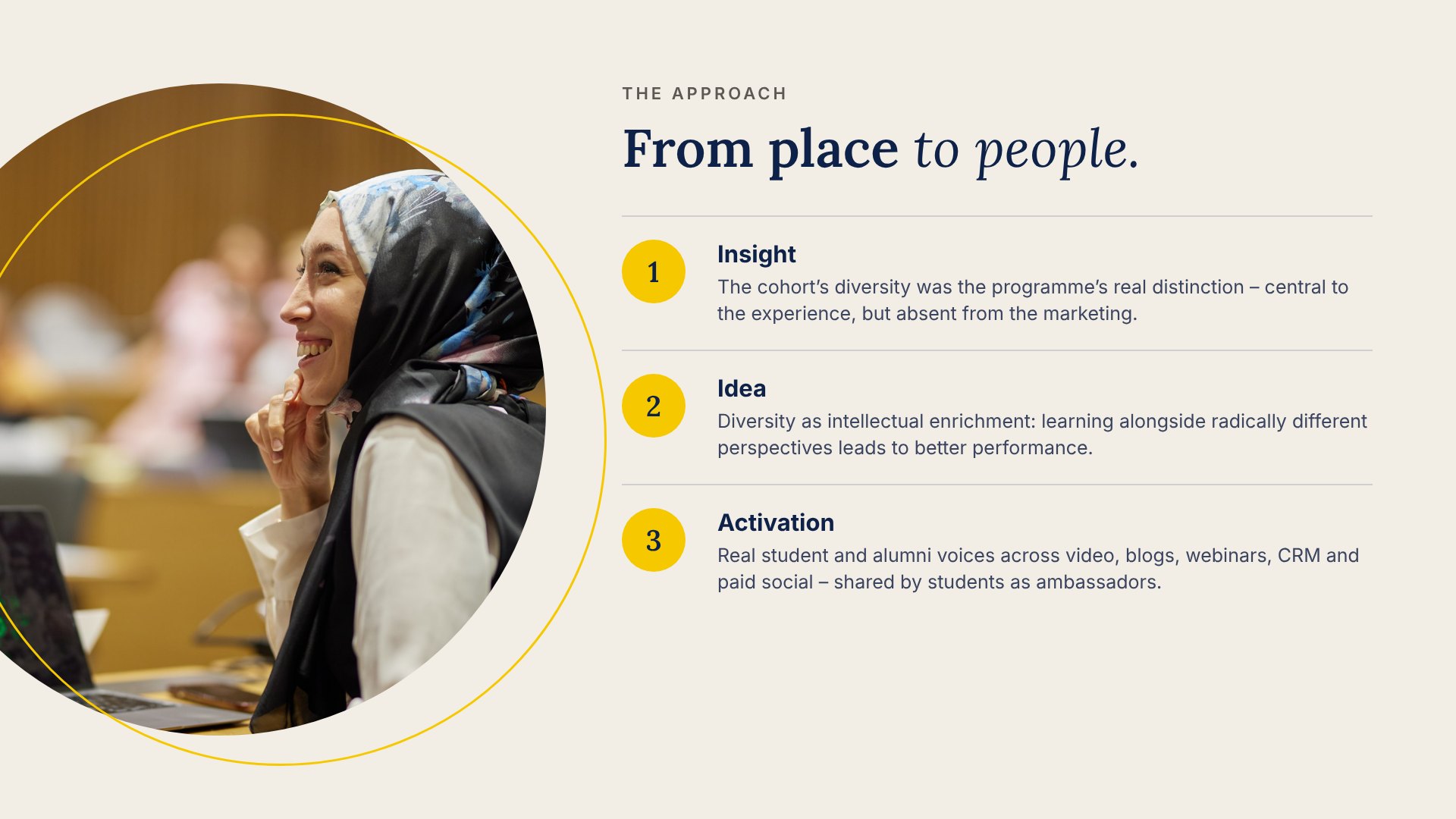
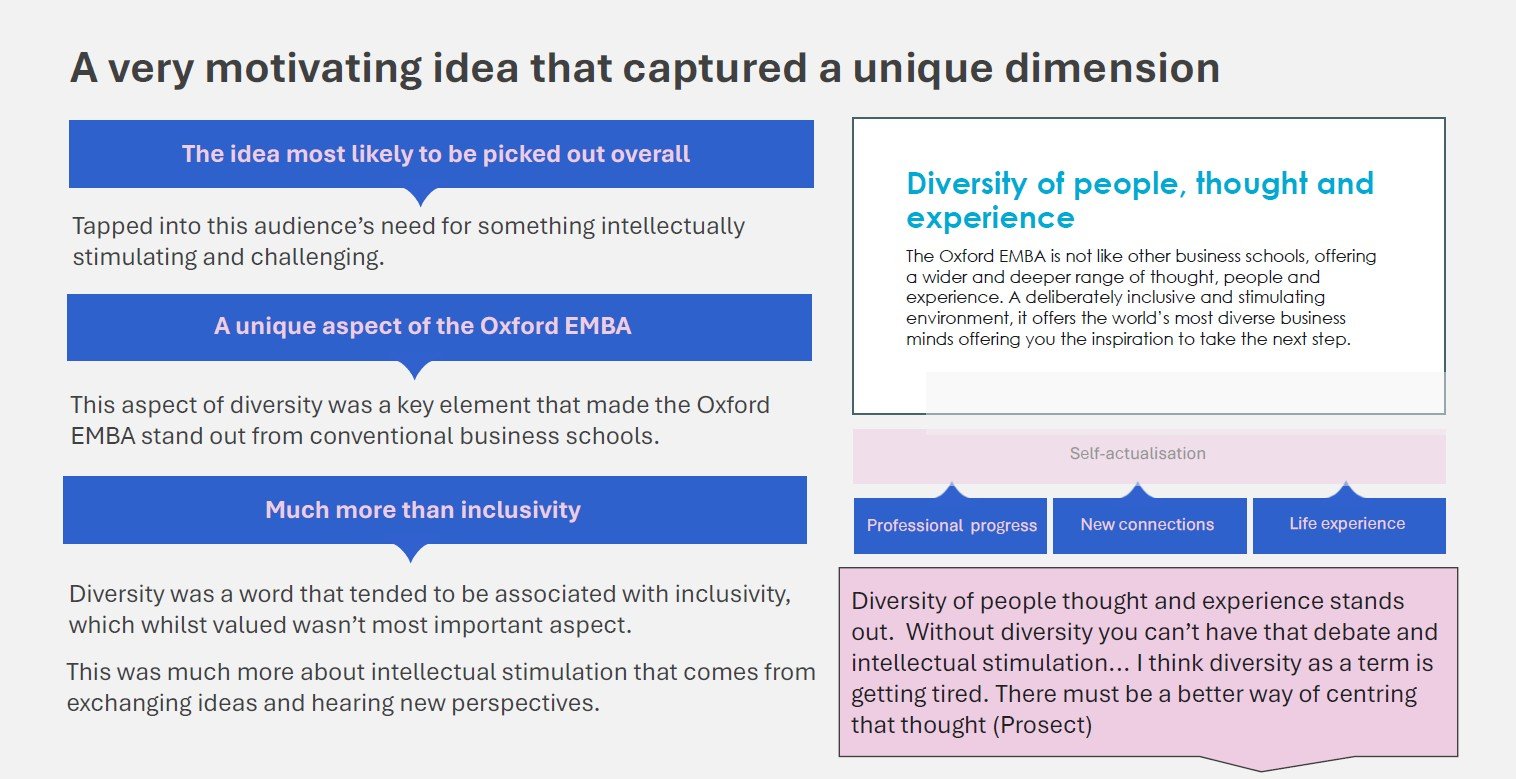
- Our people were our difference. Beyond the Oxford brand, the programme’s most distinctive strength was its unusually diverse cohort, spanning industries, cultures, nationalities and career stages. It was central to the student experience, but absent from our marketing.
What we did
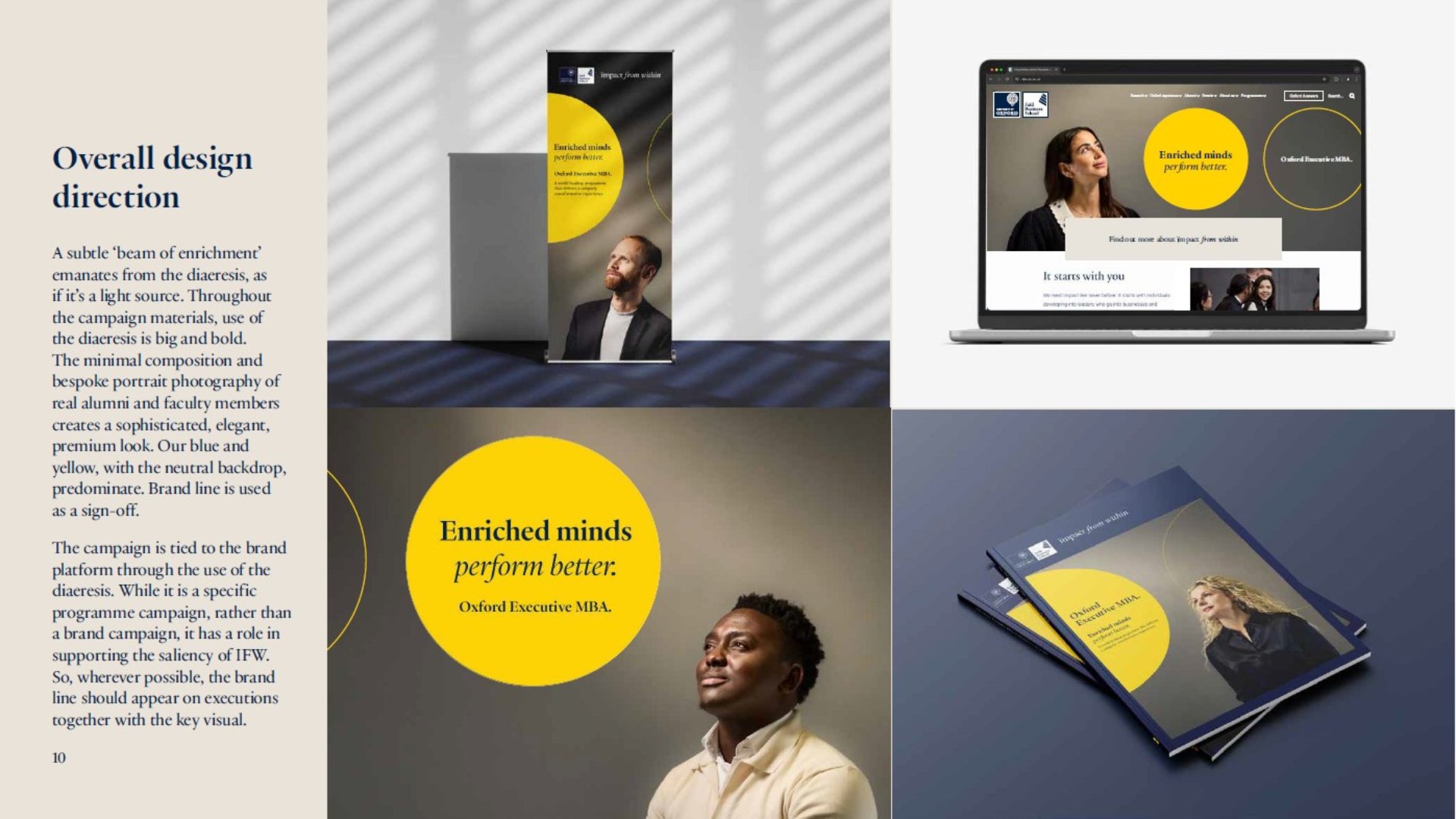
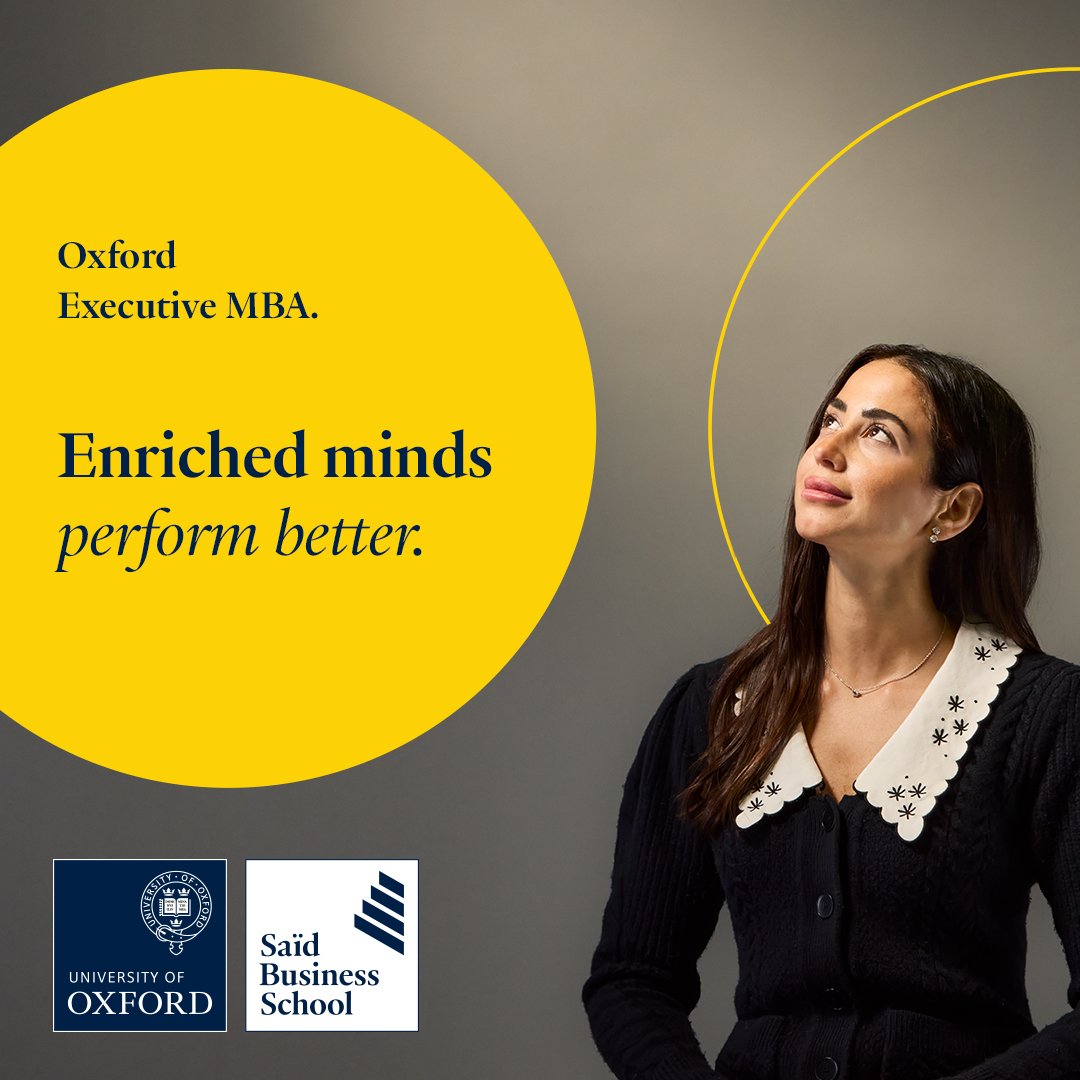
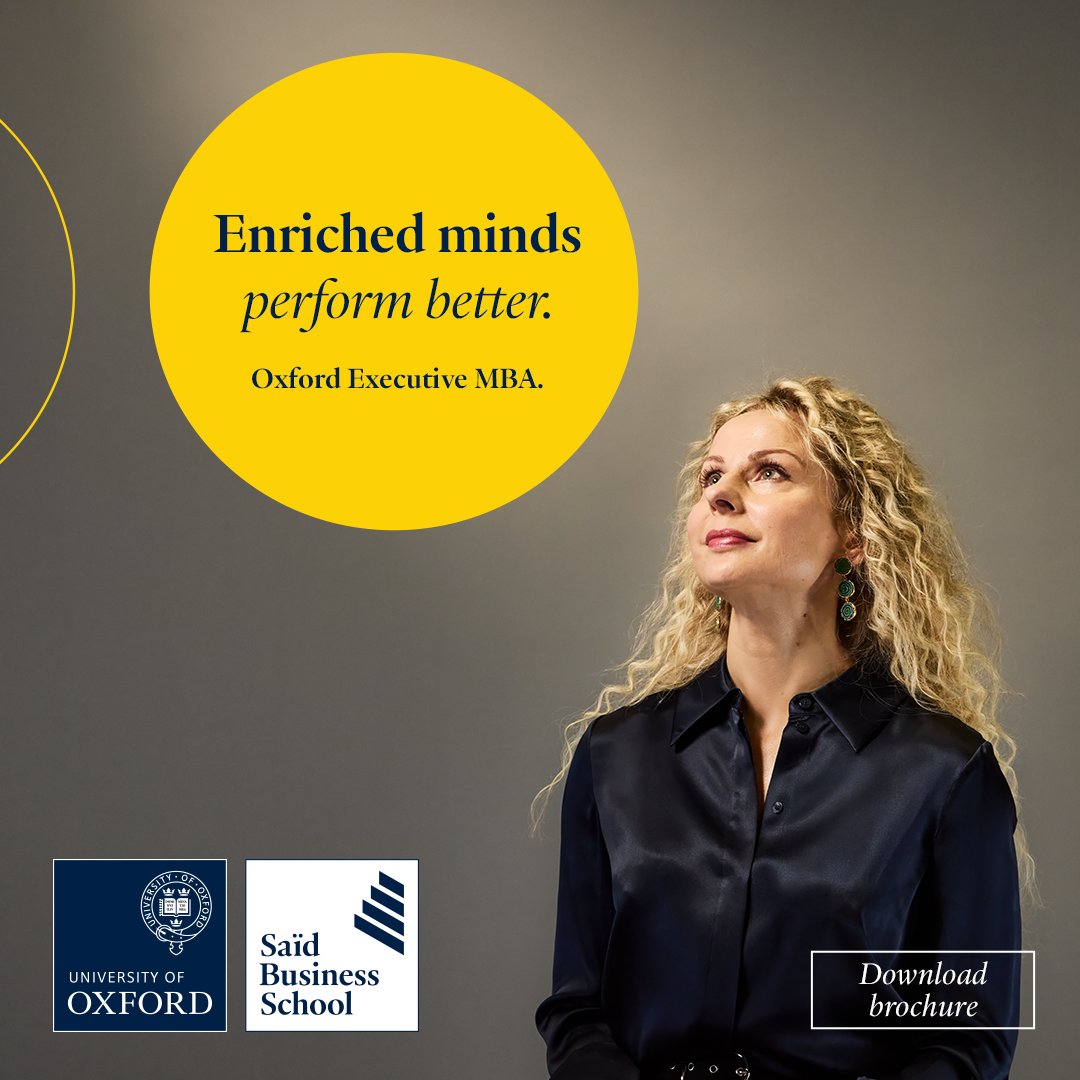
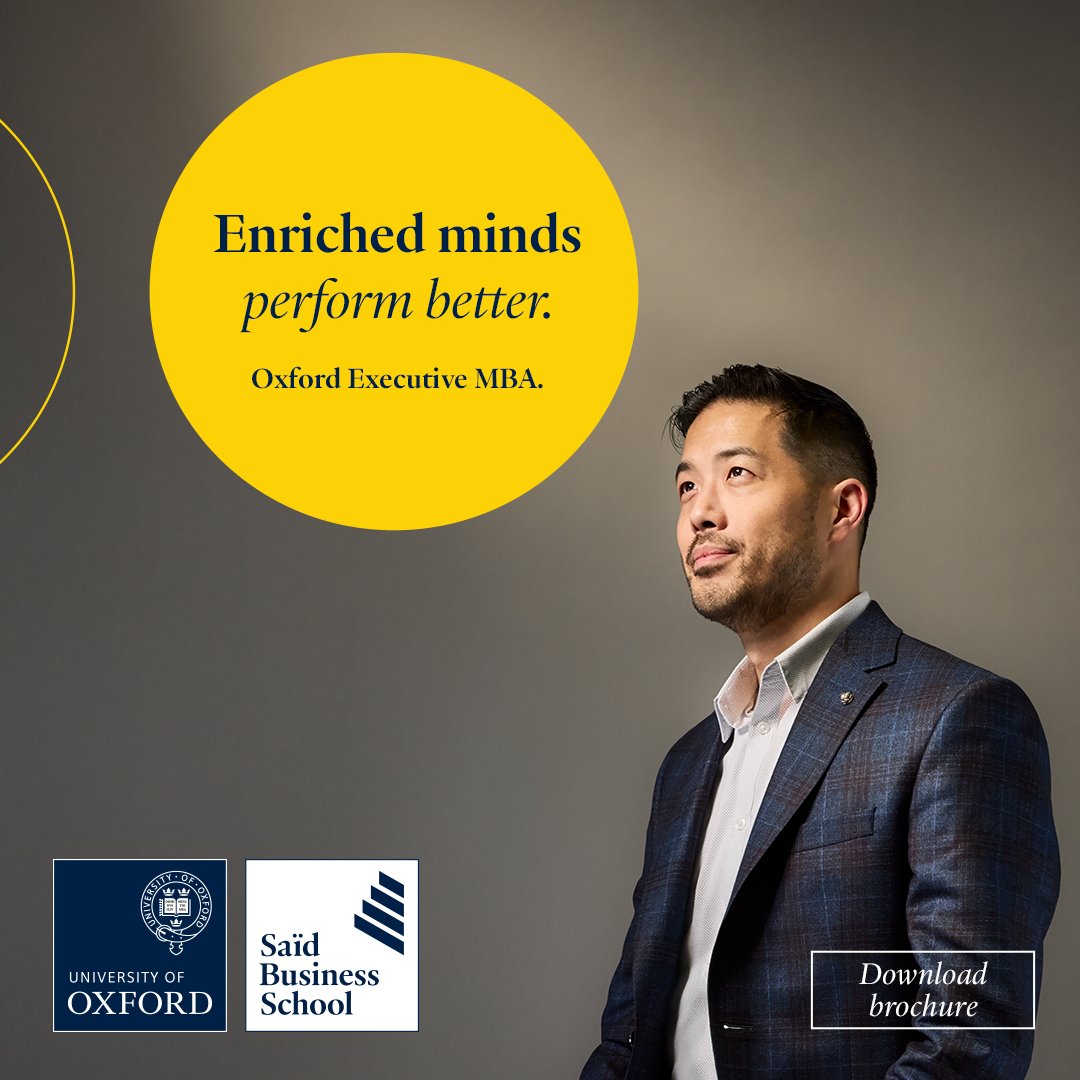
These insights shaped a new brand strategy and the programme’s first fully integrated creative campaign: Enriched minds perform better. We didn’t present diversity as surface-level inclusivity. We presented it as intellectual enrichment: the stimulation that comes from learning alongside people with radically different perspectives.
- From place to people. We moved away from Oxford’s iconic architecture and put real students and alumni at the centre, with bespoke portrait photography and a bold new visual identity.
- Stories, not claims. Interview-led blogs, vlogs and video showcased different journeys, helping underrepresented audiences – particularly women – see themselves on the programme.
- Smarter media investment. Analysis of historic application data identified our most valuable international regions, and we reallocated budget to brand building there and on proven channels, notably LinkedIn and Google.
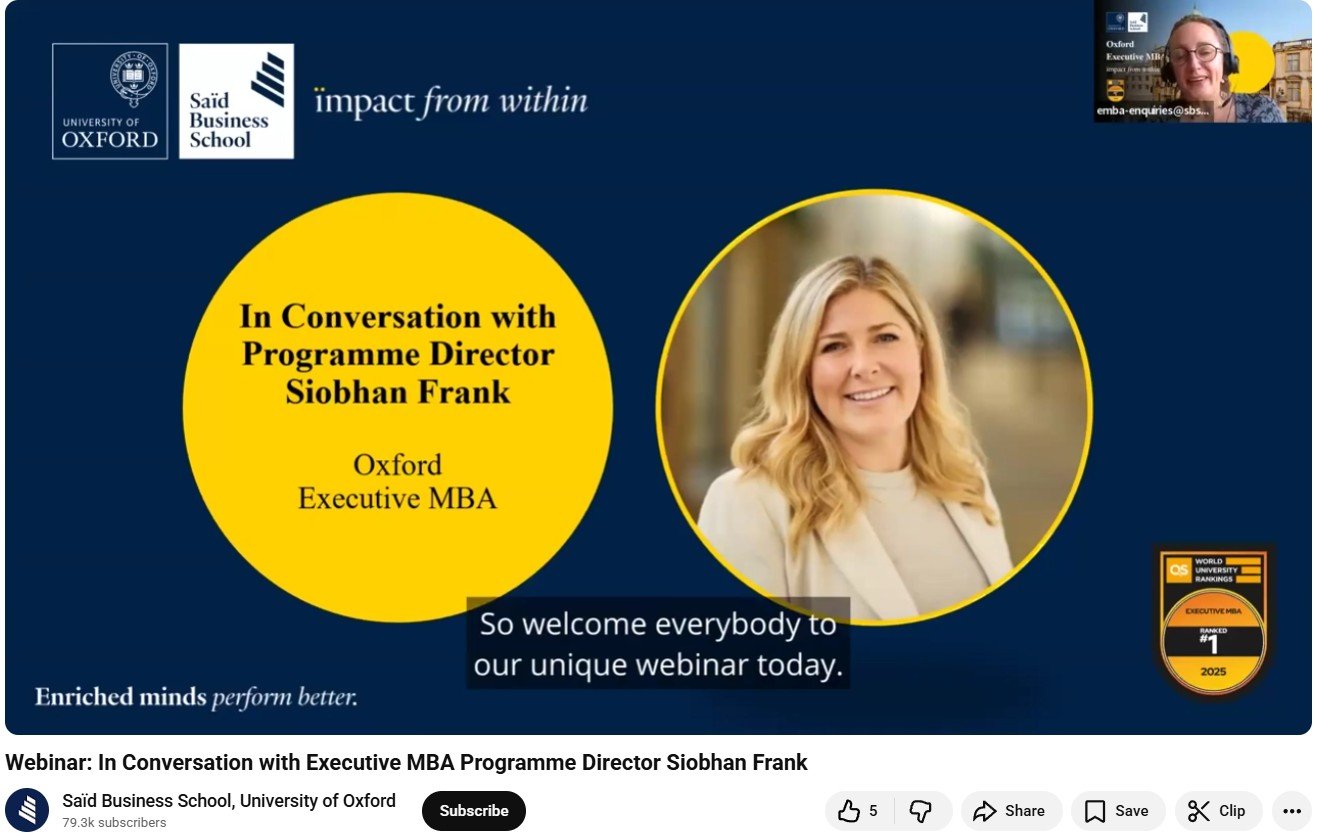
- Content-rich journeys. Event and nurture emails became content-led CRM journeys, and we expanded student- and alumni-led webinars, linking them to global moments such as World Space Week.
- Students as ambassadors. Students and alumni co-created content and shared it across their own high-value professional networks, extending our reach and building trust.
- Data at every step. Live regional and channel dashboards let us optimise in real time and stop underperforming activity early.
We also created a refreshed value proposition, messaging framework, brand playbook and templates, and redesigned print, digital and video assets throughout.
The results
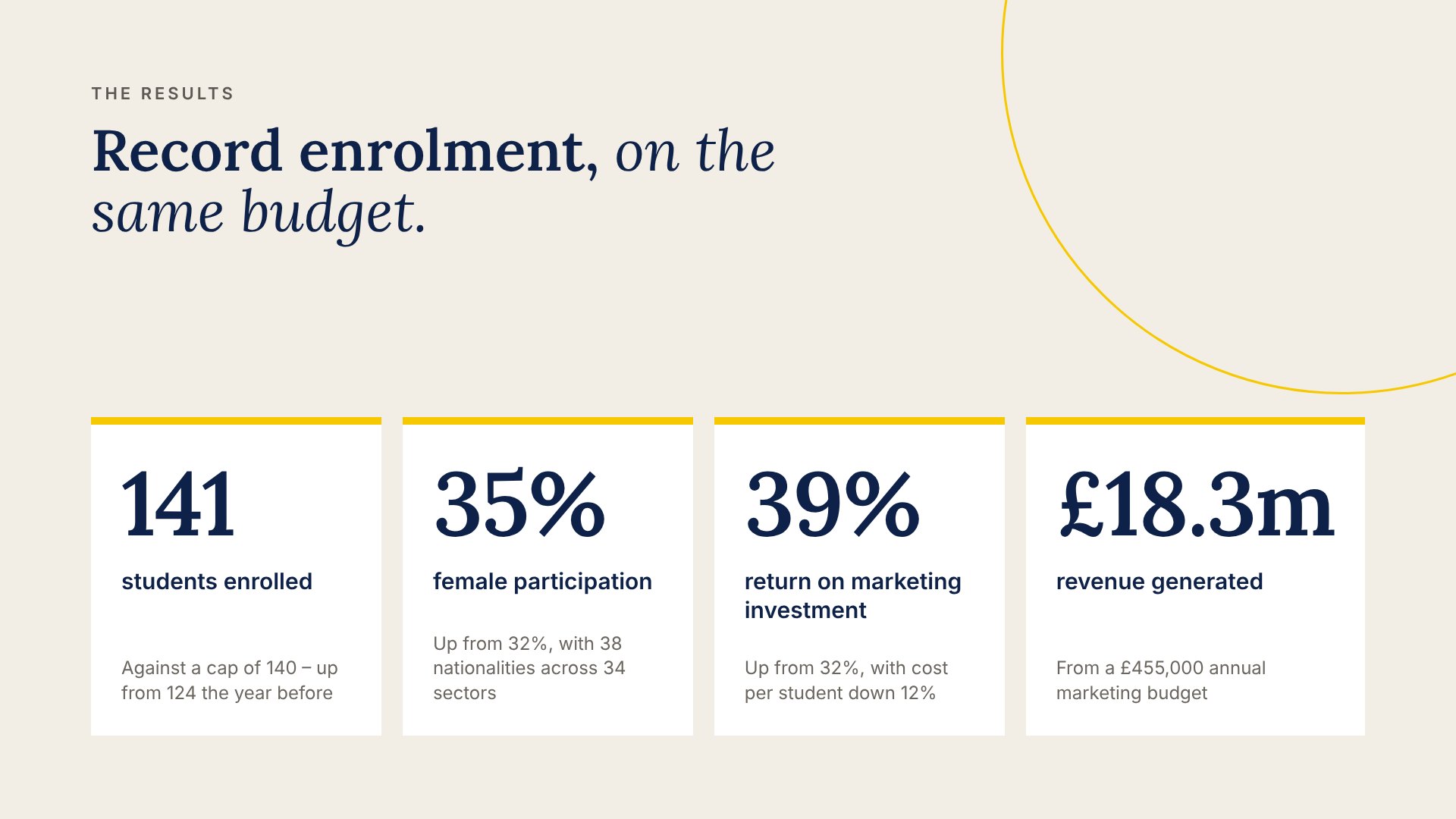
Over 12 months, on the same £455,000 budget as the previous year, the campaign exceeded its targets and delivered a record intake.
- 141 students enrolled against a cap of 140 (up from 124 the year before)
- Female participation up from 32% to 35%, with 38 nationalities across 34 sectors
- £18.33m revenue and a 39% return on marketing investment (up from 32%)
- Cost per student down 12% to £3,226
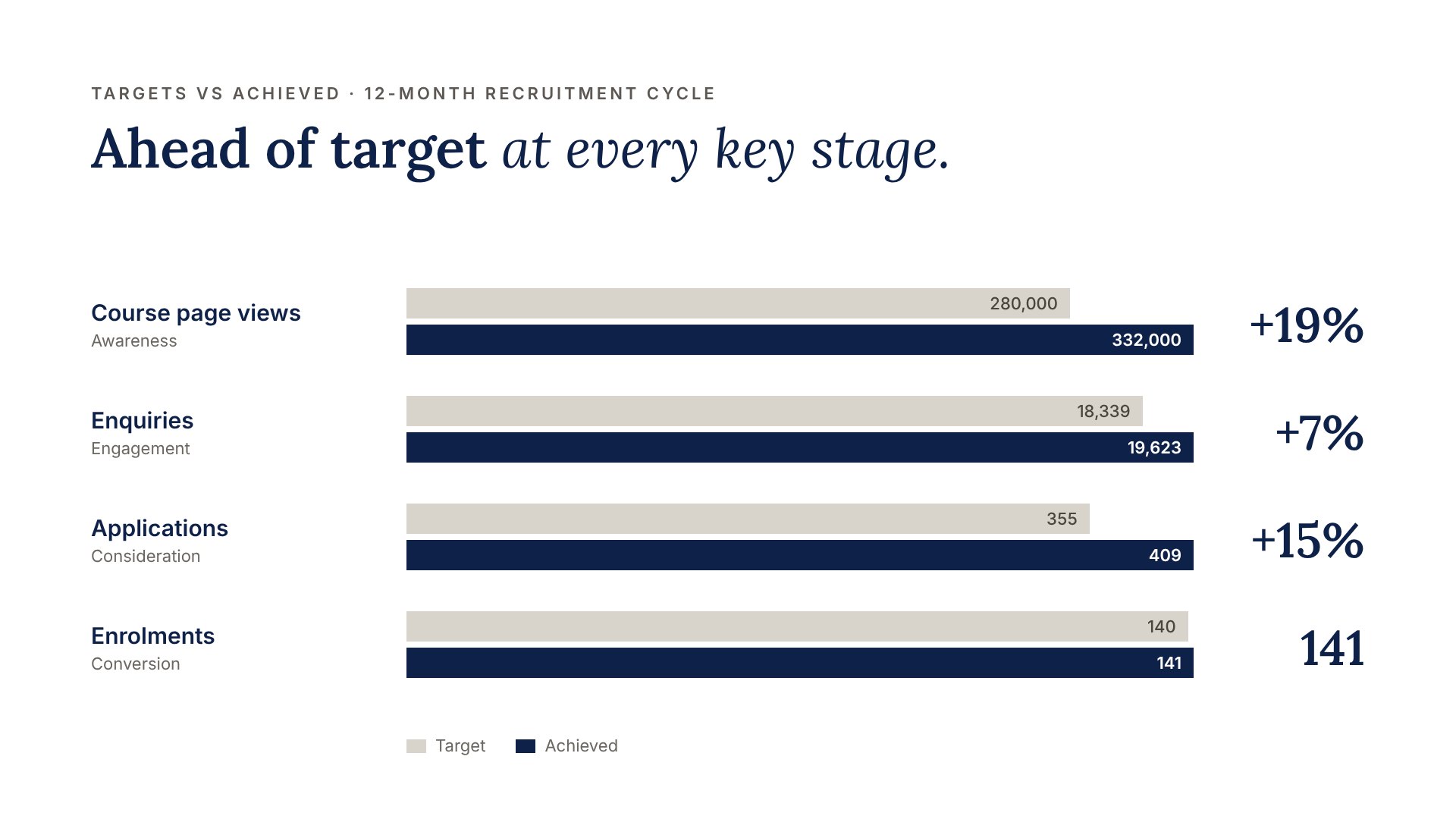
- 332,000 course page views – 19% above target
- 19,623 enquiries – 7% above target and 21% up on the previous year
- 409 applications – 15% above target
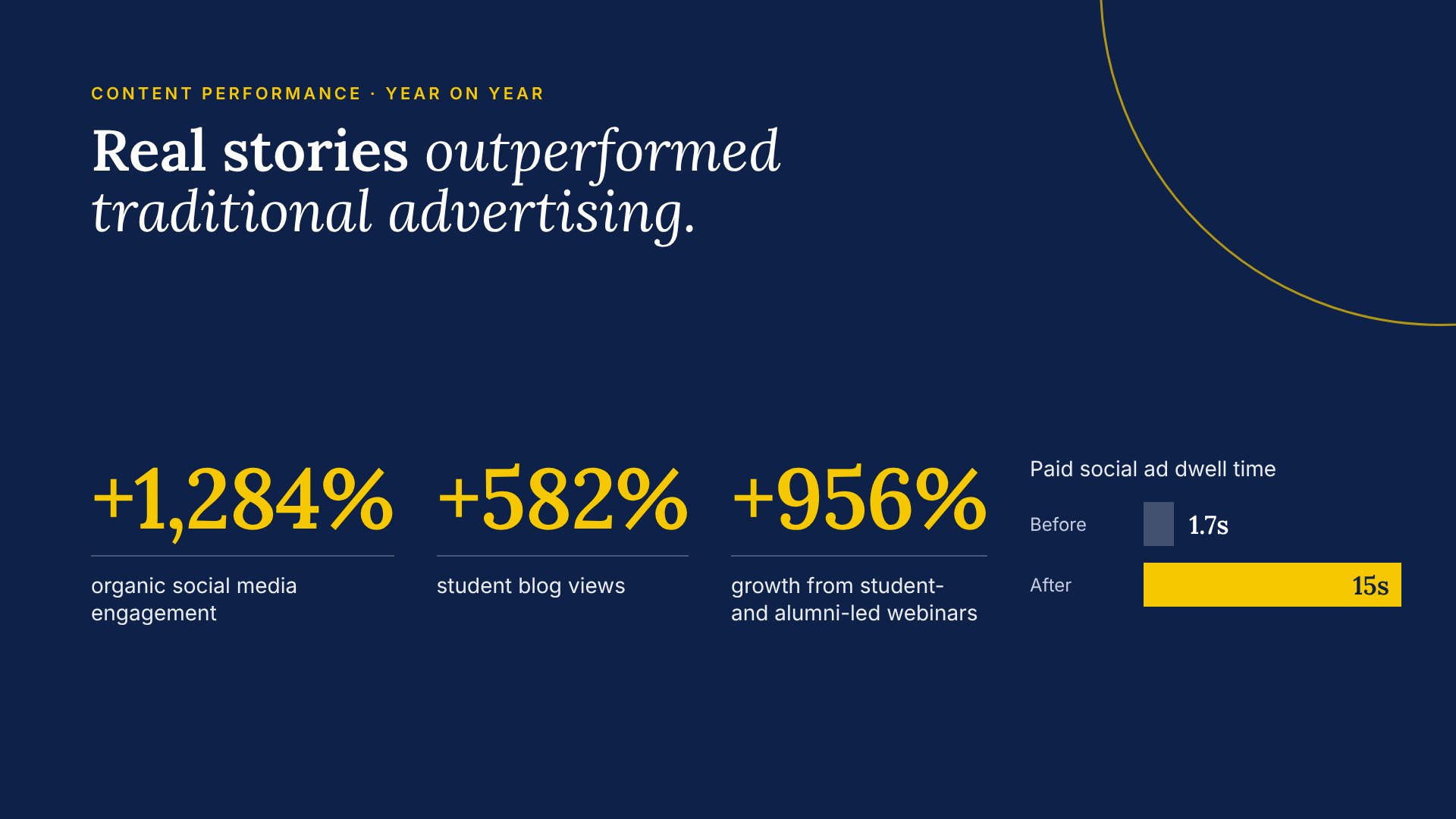
Authentic content drove that growth, and students’ own stories consistently outperformed traditional advertising:
- Organic social media engagement up 1,284%
- Student blog views up 582%
- 956% growth from student- and alumni-led webinars
- Paid social dwell time up from 1.7 to 15 seconds – an agency first, which prompted a step-change in Saïd Business School’s wider paid media approach
Not everything worked first time. A Meta test brought strong reach but low intent, so after several months of optimisation we switched it off. As a result, high-quality enquiries finished 13% below target, though applications and enrolments still exceeded theirs.
Beyond the numbers, the programme now has a distinctive, coherent brand for the first time, with a clear proposition and toolkits that other programmes have since adopted. It has also strengthened pride and advocacy among students, alumni and staff.
And all of this was delivered by a marketing team of just 1.5 people, through maternity leave, organisational change and health challenges. It shows what collaboration and purpose-led storytelling can achieve.
Your next steps
If you’re interested in how I could help you with your brand, content and campaign strategy, say hello today.